 EN
EN AR
AR NL
NL FR
FR DE
DE EL
EL HI
HI IT
IT KO
KO PL
PL PT
PT RU
RU ES
ES TL
TL IW
IW ID
ID UK
UK VI
VI HU
HU TH
TH TR
TR FA
FA MS
MS SW
SW AZ
AZ UR
UR BN
BN KK
KK
Indoor Power Supply Solutions — A practical guide to LED and industrial power for indoor projects
Indoor power supplies convert AC mains into the DC voltages your equipment needs, ensuring dependable operation for LED lighting, signage, security systems, medical instruments, and automation controllers. This guide breaks down common indoor power supply families, shows how LED drivers differ from industrial switching supplies, and lays out selection criteria: output mode, wattage and headroom, dimming protocols, and environmental protection. You’ll see why switching supplies are usually the best choice indoors, which protection features matter most, and how form factors — from slim modules to cabinet units — match specific installations. We point to useful technical resources, explain the role of certifications, and describe how manufacturers handle custom and bulk orders. Finally, we highlight WHOOSH's indoor product lines and quality controls so procurement and engineering teams can evaluate fit-for-purpose options.
💡 1. Key Types of Indoor Power Supplies
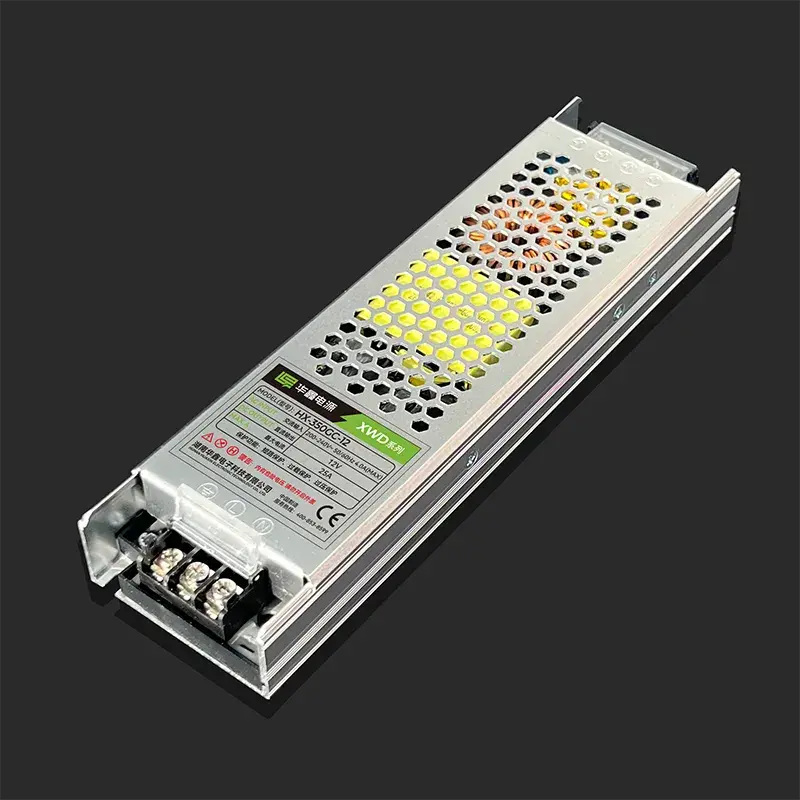
Indoor power supplies come in several families to meet different electrical, mechanical and control needs. Most modern units use switching conversion and provide either constant voltage (CV) or constant current (CC). Common nominal outputs are 12 V and 24 V, with 24 V often preferred for longer runs to reduce voltage drop. The table below summarizes the main attributes.
| Power Supply Type | Key Attribute | Typical Use / Value |
|---|---|---|
| LED Driver | CC or CV outputs; integrated dimming options | Indoor LED strips, fixtures and signage that need flicker-free dimming |
| Slim Power Supply | Low-profile enclosure; usually CV outputs | Under-cabinet lighting, slim fixtures and retrofit installations |
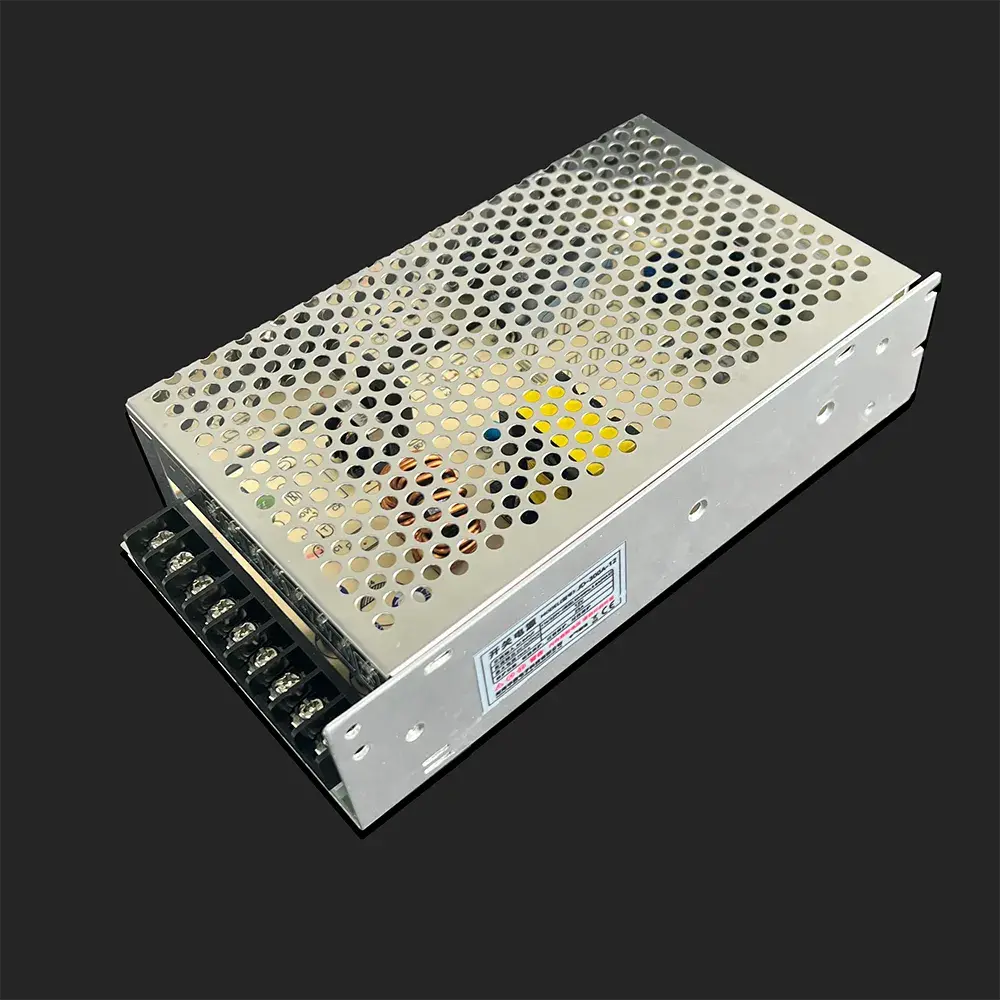
| Cabinet Power Supply | High wattage, enclosed chassis for centralized power | Centralized lighting hubs and retail signage power cabinets |
| Industrial SMPS / DIN-rail | Robust EMC/EMI performance; DIN mounting | Automation controllers, access control panels and CCTV power distribution |
💡 2. How LED Power Supplies Differ from Industrial Indoor Supplies
LED drivers (CC/CV) are designed for lighting and often include dimming interfaces such as TRIAC, 0–10V or digital protocols to prevent flicker and color shift. Industrial indoor supplies emphasize wide input ranges, rugged mounting (DIN-rail or panel), and enhanced EMC/EMI immunity for electrically noisy control environments. Choose LED drivers when current regulation and dimming quality are paramount; choose industrial supplies when ruggedness and signal immunity matter more.
⚙️ 3. Choosing the Right Indoor Power Supply
Picking the right indoor power supply means checking output mode (CV vs CC), total wattage plus headroom, dimming and control needs, mechanical form factor, IP/enclosure rating, and required certifications. Begin by defining the load, confirm dimming protocol compatibility (TRIAC, 0–10V, DALI), and factor in thermal derating. Also consider procurement items such as stock levels, OEM/ODM options, and supplier certification records.
- Define the load type and whether constant current or constant voltage is required.
- Calculate total wattage and include 20–30% headroom for reliability and future expansion.
- Verify dimming protocol compatibility and control interface requirements for integration.
| Application | Required Spec | Suggested PSU Type / Spec |
|---|---|---|
| Retail LED shelf lighting | CV 12–24 V, 30–60 W, flicker-free dimming | Slim power supply or dimmable LED driver with 0–10V support |
| Backlit signage | CV 24 V, distributed outputs, long cable runs | Cabinet power supply with multiple outputs and high efficiency |
| Access control / sensors | CV 12 V / 24 V, surge protection, DIN-rail mount | Industrial DIN-rail SMPS with OVP/OCP and EMC filtering |
| Machine control | Stable 24 V, low ripple, redundancy option | Industrial SMPS with redundant supply capability and monitoring |
1)Factors for LED Power Supplies
Match the supply’s output mode to the LED load: constant current drivers for LED strings, and constant voltage drivers for LED modules and strips. A mode mismatch can cause flicker, premature failure or uneven illumination. Confirm dimming protocol early (TRIAC, 0–10V, DALI). Efficiency and thermal management are important: higher efficiency lowers waste heat, but you must account for ambient temperature derating and enclosure ventilation. Check ripple and inrush characteristics to avoid visible flicker and nuisance trips.
2)Industrial Power Supplies for Automation & Security
For automation and security systems, choose industrial supplies with strong EMC/EMI performance, solid protection features, and mounting suited for control cabinets or DIN rails. PLCs, access controllers and cameras benefit from low ripple, reliable overcurrent protection and surge immunity. Redundancy and monitoring outputs improve uptime for critical systems. Prioritize reinforced isolation, wide input tolerance, and standard mechanical formats for panel or rack integration.
💡 4. Benefits of Switching Power Supplies for Indoor Use
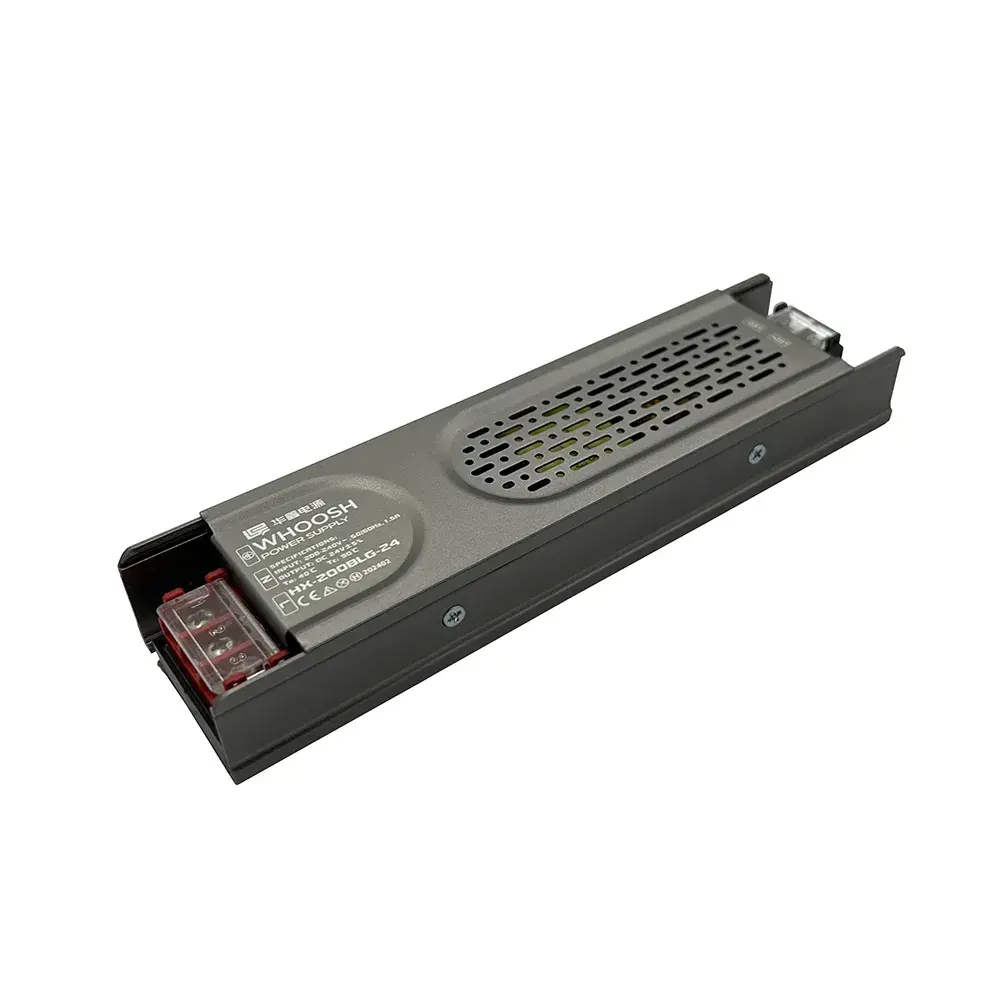
Switching power supplies offer higher efficiency, smaller size and lower heat compared with linear regulators, making them the preferred choice for most indoor applications where space and thermal budgets are limited. Their switching topology reduces conduction losses and active power-factor correction (PFC) improves input current shape. Modern switching designs enable slim enclosures and multi-output configurations that simplify wiring and reduce system cost. For LED lighting and industrial controllers, switching supplies deliver steady voltage/current control with built-in protections that boost system reliability.
- Higher efficiency lowers operating cost and thermal burden.
- Compact size enables slim, concealed installations.
- Integrated protections safeguard both the supply and connected equipment.
Essential Protection Features
Switching supplies gain efficiency by transferring energy via high-frequency switching elements and optimized passives; active PFC reduces input current distortion and helps the PSU perform across varying line conditions, improving long-term reliability. Key protection features include overvoltage protection (OVP), overcurrent protection (OCP), short-circuit protection (SCP), and over-temperature protection (OTP). Surge and inrush handling protect the PSU and upstream distribution. For LED loads, soft-start and controlled inrush reduce visible flicker and lower the risk of tripped breakers. Prioritize protections by application to align supplier specs with operational risk.
🏢 5. Common Applications & WHOOSH Support
Indoor power supplies serve a wide range of applications: LED lighting and signage, security and access control, medical devices, and industrial automation. Each category has specific requirements: lighting needs low ripple and dimming compatibility; security systems need reliable backup and surge protection; medical devices demand strict safety and EMC controls; automation typically calls for rugged DIN-rail integration. Identifying these application-driven needs early ensures the selected PSU balances electrical performance, mechanical integration and regulatory compliance.
- LED lighting and signage: choose dimmable LED drivers or cabinet supplies with attention to flicker and thermal derating.
- Security devices and access control: prefer DIN-rail industrial SMPS with surge protection and low ripple.
- Medical and laboratory equipment: require supplies with detailed EMC and safety documentation and controlled calibration.
WHOOSH’s Offerings
WHOOSH manufactures LED AC-to-DC switching supplies including indoor power supplies, dimmable LED drivers, slim power supplies and cabinet power supplies. We support a range of indoor applications — from large lighting rollouts and OEM security runs to custom units for medical projects. WHOOSH offers OEM/ODM options to adjust mechanical footprints, output voltages, dimming protocols and connector types, and provides the documentation and testing procurement teams expect. Certifications such as ISO9001:2015, FCC, CE and CCC support supplier qualification and help reduce integration time for system integrators.
LED Lighting and Signage Applications
In lighting and signage, power supplies must control current or voltage precisely, support required dimming controls, and minimize flicker for a consistent visual experience. Slim power supplies and dimmable LED drivers are suited to fixtures and backlit displays where space is limited and heat dissipation matters. Thermal management affects LED life and color stability, so designers typically choose higher-efficiency supplies and provide headroom in ratings. For long signage runs, 24 V architectures reduce voltage drop and allow smaller conductors, simplifying installation and keeping brightness uniform.
Medical and Industrial Automation Applications
Medical and industrial automation applications demand higher assurance for reliability and EMC performance, and often additional documentation during procurement because failures can affect safety or uptime. Redundant power architectures, remote monitoring and controlled startup sequencing increase resilience in critical installations. Supplies for these sectors usually feature low ripple, reinforced isolation and tight regulation under varying loads. Procurement teams should request test reports, EMC data and documented quality processes when qualifying suppliers for these contexts.
❓ Frequently Asked Questions
1. What are the common challenges when selecting indoor power supplies?
Key challenges include matching voltage/current requirements, confirming dimming and environmental needs, and verifying supplier reliability and certifications. The right balance of cost, performance and compliance is essential.
2. How do I ensure the longevity of my indoor power supply?
Select a unit with 20–30% wattage headroom, ensure proper ventilation and follow derating guidance. Built-in protections (OVP, OCP) also help protect the supply and connected equipment.
3. What role does thermal management play in indoor power supplies?
Thermal management is critical: excess heat shortens component life. Use high-efficiency supplies, provide adequate enclosure ventilation or heatsinking, and apply derating based on ambient temperature.
4. How do I choose between a Constant Voltage (CV) and Constant Current (CC) power supply?
Choose a Constant Voltage (CV) supply for LED modules, strips, or other loads that require a stable voltage, often with current-limiting resistors. Opt for a Constant Current (CC) supply for direct-driving LED strings or arrays that need a precise, regulated current to maintain consistent brightness and prevent damage.
5. What certifications are most important for indoor power supplies?
Essential certifications include CE (for Europe), FCC (for North America), and CCC (for China) for market access and EMC/safety compliance. ISO9001:2015 indicates a robust quality management system. Specific applications like medical devices may require additional specialized certifications.